


Istria: Tread Warily When Researching Family History
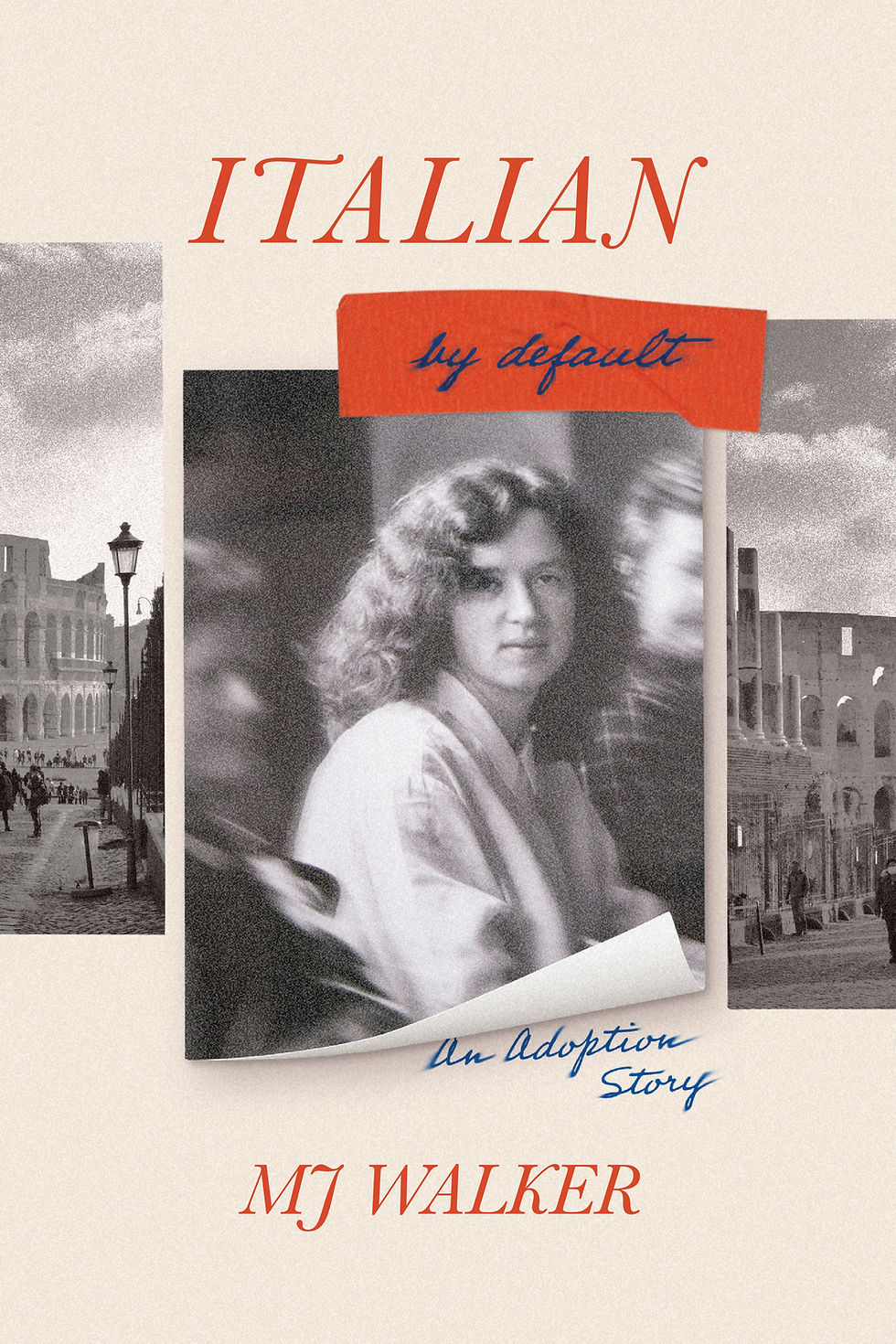
I decided to research the history of Istria because my biological mother was Istrian. It was a bad job from the start and it finished off worse. Nevertheless, I am reminded of the quote from Cicero: ‘To be ignorant of what occurred before you were born is to remain always a child.’ So I proceed with confidence.
Here is what I had: Silvana was born in Tar, Istria (today’s Croatia) in 1920, educated in Udine and Florence in Italy, travelled to Australia in 1950 (and thereafter) on a Yugoslav passport and on my adoption papers recorded her nationality as Yugoslavian. Her father was born in Austrian Trieste, the port of Vienna in 1886, her mother was also born in Tar in 1895.
At this point I began to write a story using Silvana’s memoirs of Istria in the 1920’s as my story world. After five months of heartbreaking research, I had this: Trieste and Istria, being in the hands of Fascist Italy during the 1920’s and 30’s and comprising a sizeable Slavic population of Slovenes and Croats, becomes a focus for Italian nationalism. Mussolini believes Slavs are an inferior and barbaric race and treats them accordingly. In Trieste, what was once the model of a multi-ethic city under Austria of Slovenes, Croats, Jews, Germans as well as Italians, Trieste becomes possessed by the spirit of fascism. During World War 2 the Nazis built an extermination camp there, complete with death chambers and crematoria, to exterminate Jews. Even after Mussolini’s execution neo-fascism reared its ugly head in Trieste in 1954 when, after nine years of being a free port, it was handed back to Italy. Ten percent of the entire population were ‘encouraged’ to leave and ninety percent migrated to Australia between 1954 and 1961. Their crime? Not being Italian enough.
The Italian nationalist movement commenced in the nineteenth century. It accused the multi-ethnic Austrian Empire of repressing Italy. It supported irredentism, the idea of ‘redeeming’ territory imagined to be Italian by having Italian speakers within its communities, by belonging to the Roman Empire, by belonging to the Empire of Venice, or having natural frontiers interpreted to favour Italy. This idea was exploited in Mussolini’s Empire fantasy.
If, at this point, you have a half-Italian spouse who knows nothing of this, then you have a dilemma. Was Cicero correct? Should I tell my husband? His family lived in Turin nowhere near the border with Yugoslavia, but he might have had problems of a similar nature with Napoleon. I could commiserate I expect.
While the Venetian-speaking coast of Istria, including my wealthy birth family, is resentful of Tito’s Communists for throwing Italian and Venetian speakers out of Istria at the end of World War 2 (and this is by no means was all the partisans did by way of reprisal against fascist Italy), the Italian generals who committed war crimes of genocidal proportions against the Slovene population were never brought to justice.
To quote from Gianfranco Cresciani: A Clash of Civilizations? The Slovene and Italian Minorities and the Problem of Trieste.
Italian Historical Society Journal Volume 12 #2 July/December 2004
(NB. The Province called Lubiana by the Italians was part of Slovenia when it was invaded by the Nazis and the Italians.)
Likewise, Italians indicted of war crimes did not undergo trial. The High Commissioner for the Province of Lubiana, Emilio Grazioli, on 24 August 1942 advocated ‘the harshest line possible’ against the Slovene population, including its mass deportment and replacement with Italian settlers to make, as he put it, Italy’s ethnic border coincidental with its natural border. He was detained in 1945 for two murders committed near Ravenna, but not for his depredation in Slovenia. Released soon after, Grazioli disappeared into anonymity. The General commanding the XI army in Slovenia, Mario Robotti who, on 9 August 1942, remanded his officers because ‘we are not killing enough’ after the war died in his bed ignored by criminal justice investigators. The same could be said for General Mario Roatta who was the author of the infamous circular 3C, dated 1 March 1942, ordering the XI army corps to burn or destroy entire villages, execute all men found near military operations, take and execute hostages and prisoners and deport the entire population.
Cresciani concludes by writing:
The events of 1943 – 1956 left an indelible mark on the historic memory of the people of Slovenia and of Venezia Giulia, Istria, Fiume and Dalmatia.
So, research Istria at your peril, but I still agree with Cicero.


Comments